
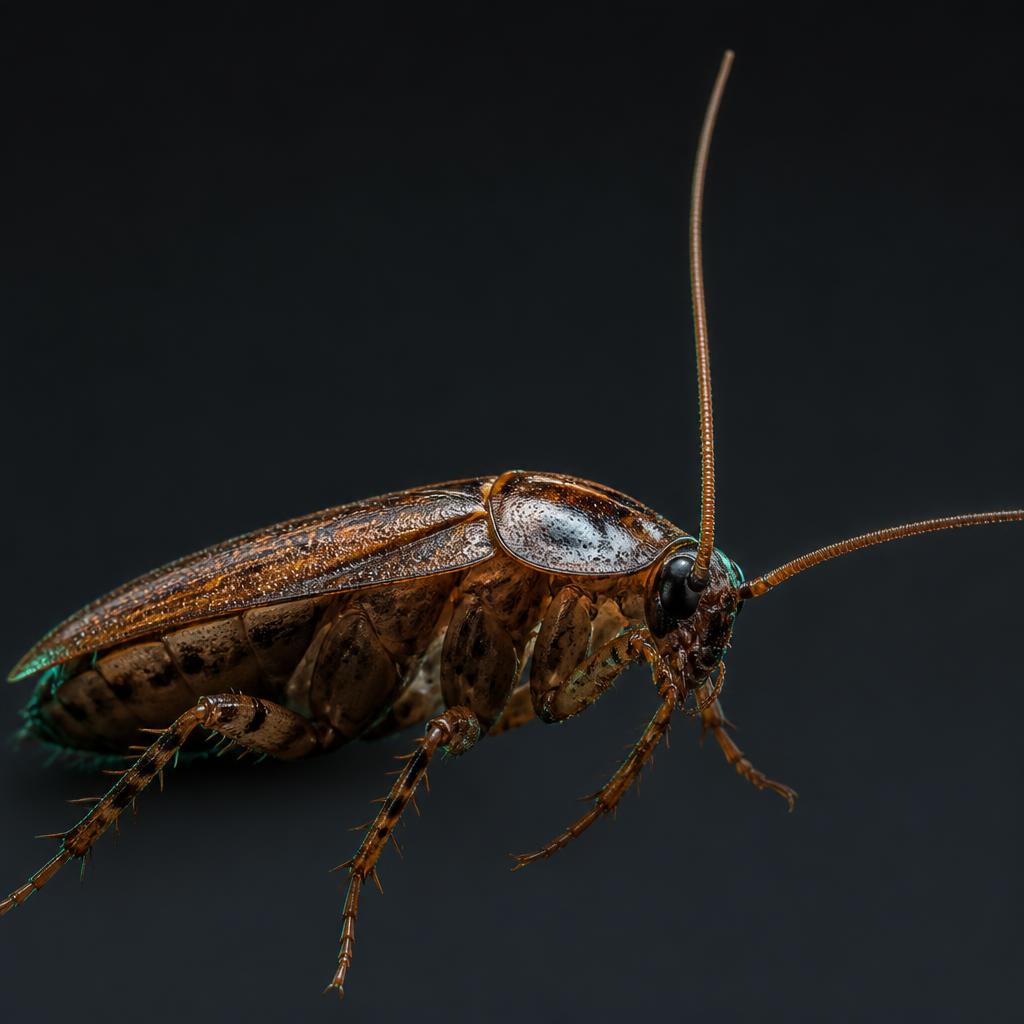
German and Oriental cockroaches are the two species we see most in the North West. They favour warm, humid areas — commercial kitchens, boiler rooms, laundries and the service voids of flats — and can travel between units through pipework and ducting.
Signs of cockroaches
- Live insects when a light is switched on at night
- Peppery droppings along edges and joints
- Egg cases in crevices and behind appliances
- An oily, unpleasant smell in the affected room
Health risks
- Bacteria spread onto food preparation surfaces
- Recognised trigger for asthma and allergy symptoms
- Significant regulatory risk for food businesses
Property damage
- Contamination of stock and packaging
- Reputational damage where customers see activity
What you can do yourself
- Surface sprays do not reach harbourage inside appliances and voids
- Population is usually far larger than what is visible
- Treatment in one flat alone rarely resolves a building-wide problem
When to call a professional
- Identification of the species, which changes the treatment approach
- Targeted treatment of harbourage and travel routes
- Monitoring to measure whether activity is genuinely falling
- Documentation for food safety records where required
Prevention tips
- Deep clean grease build-up around cookers and fryers
- Repair leaks and reduce standing water
- Seal gaps around pipe entries and service voids
- Manage waste storage tightly, especially in shared buildings
Frequently asked questions
Does this mean my kitchen is dirty?
Not necessarily. Cockroaches often arrive through service voids from neighbouring units.
Can you attend outside trading hours?
We will do our best to work around your opening hours — tell us what you need when you enquire.
Dealing with cockroaches right now?
We cover Merseyside, Cheshire, Greater Manchester and Lancashire. Send your postcode and we will confirm the earliest appointment.
 Rats
Rats Mice
Mice Wasps
Wasps